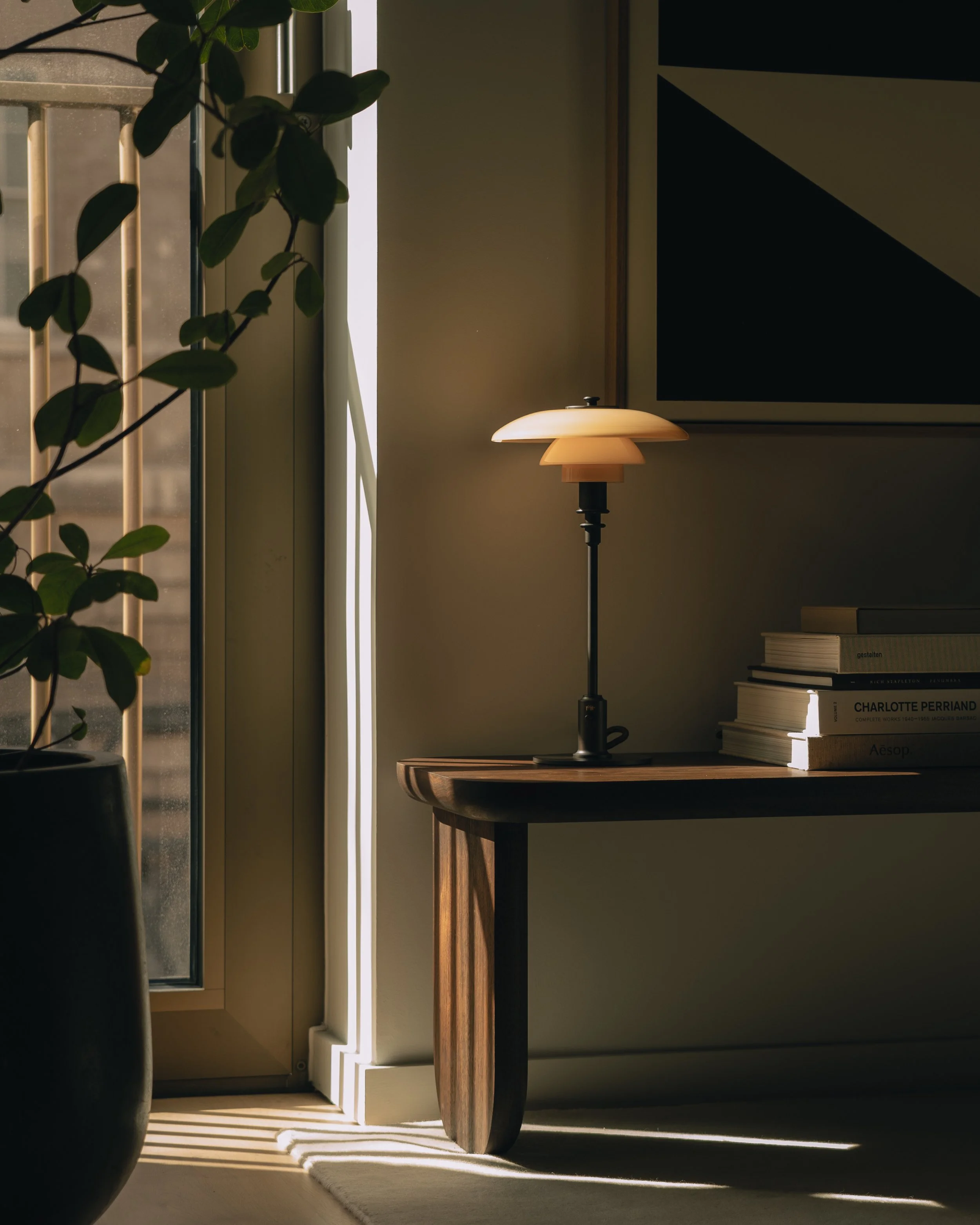
Mountain Modernism
Mid-century utility reimagined with aram
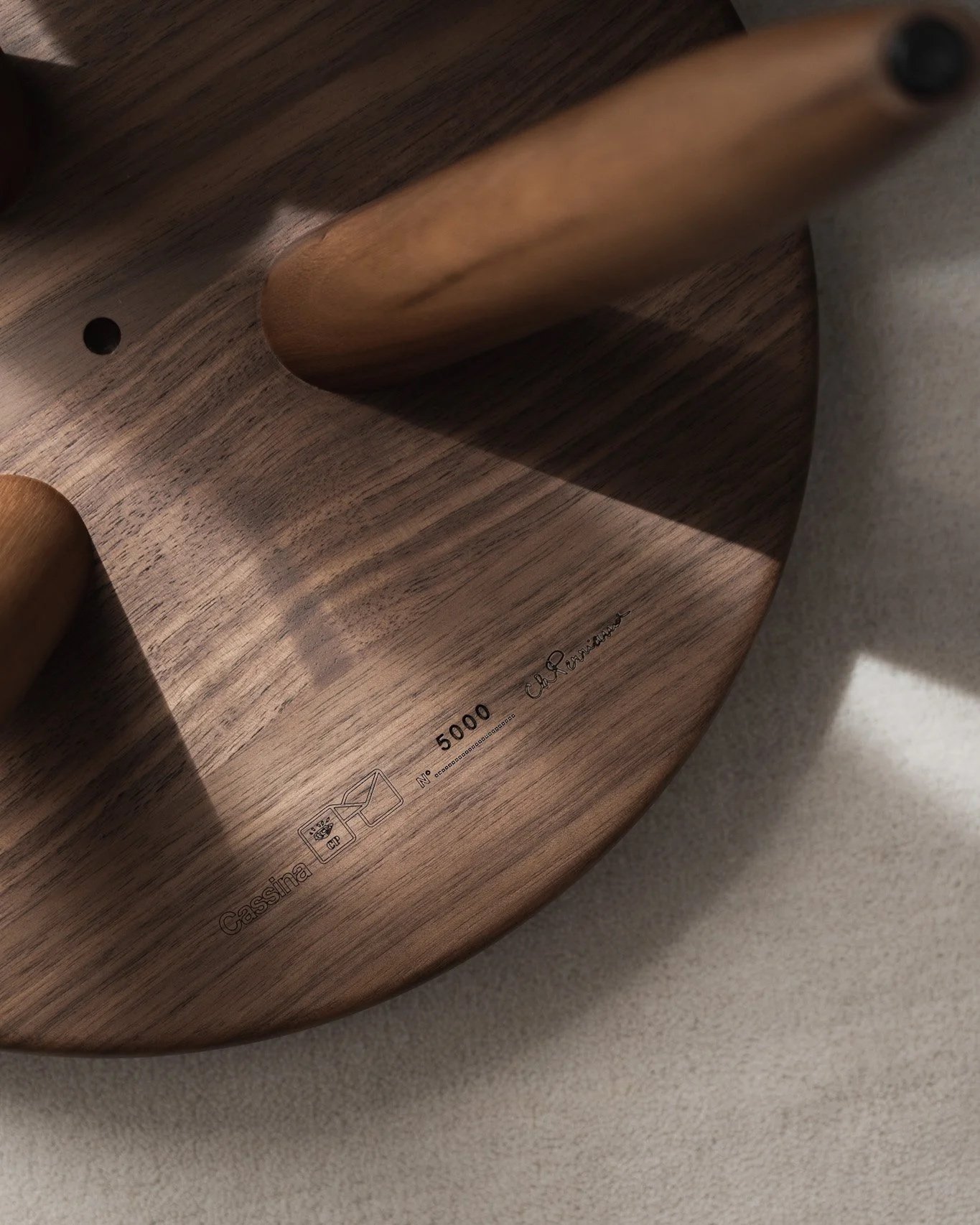
Charlotte Perriand occupies a singular position in modernist design. Working alongside Le Corbusier and Pierre Jeanneret in the late 1920s, she helped define a new language of living that privileged function, material honesty and architectural clarity over ornament. Yet it was her independent work, particularly her projects in the French Alps, that revealed her deepest sensibility: a respect for vernacular forms translated through modernist precision. For Perriand, furniture was never decorative excess but a technical response to living. Cassina’s meticulous re-edition of her Tabouret stools brings this philosophy back into focus, preserving the proportions, material integrity and quiet intelligence of the originals.
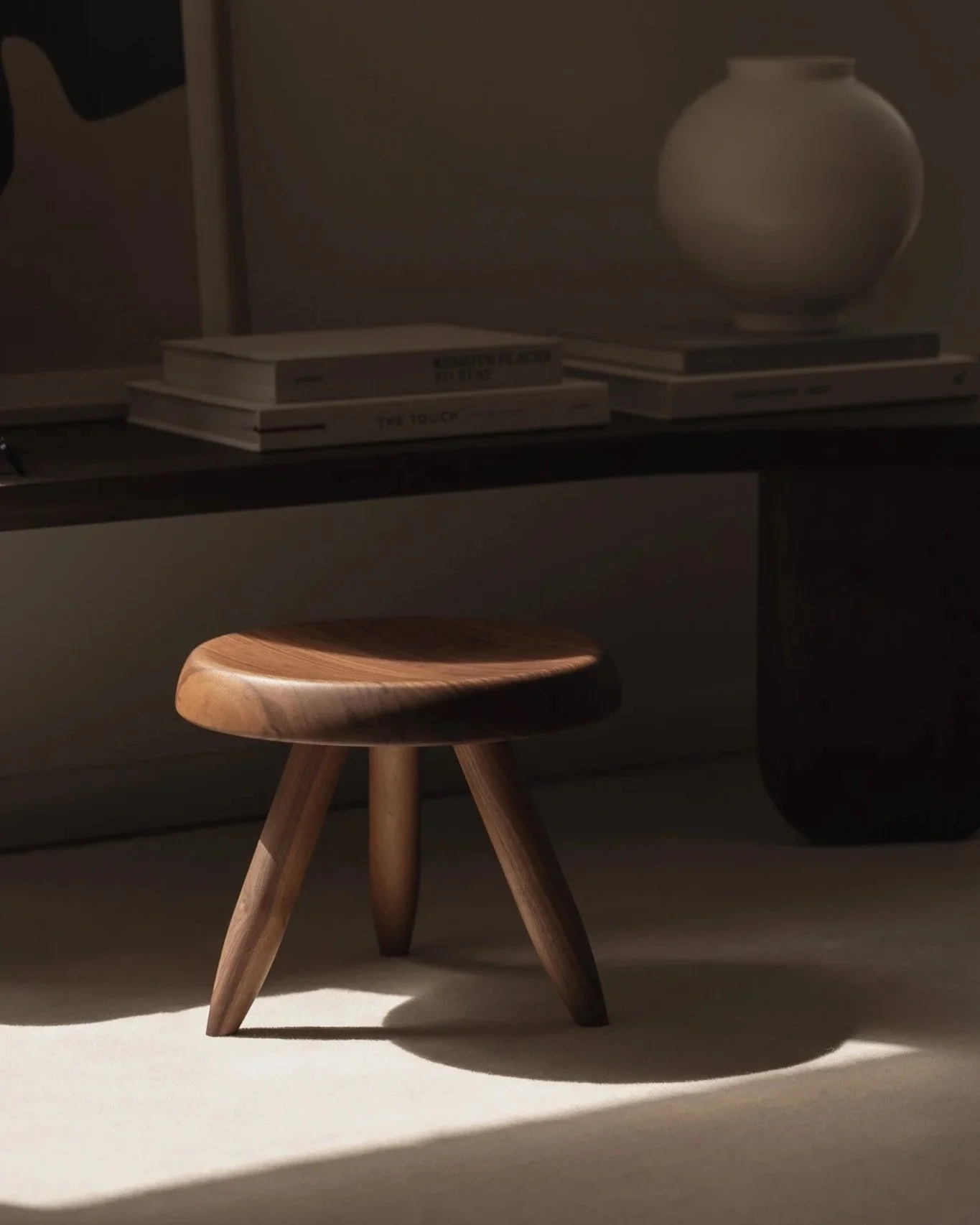
The Tabouret Berger, originally designed in 1961, takes its name from the humble milking stools used by Alpine shepherds. Reduced to three hand-turned legs and a sculpted solid wood seat, it is deceptively simple. Crafted in solid American walnut, the continuity of grain runs uninterrupted across the seat, nature itself becoming ornament. The form feels grounded yet playful, its compact proportions lending it an almost architectural presence despite its modest scale. It is a piece that speaks softly but with clarity.
“Furniture should be a tool for living — precise, honest and inseparable from its environment.”
Charlotte Perriand
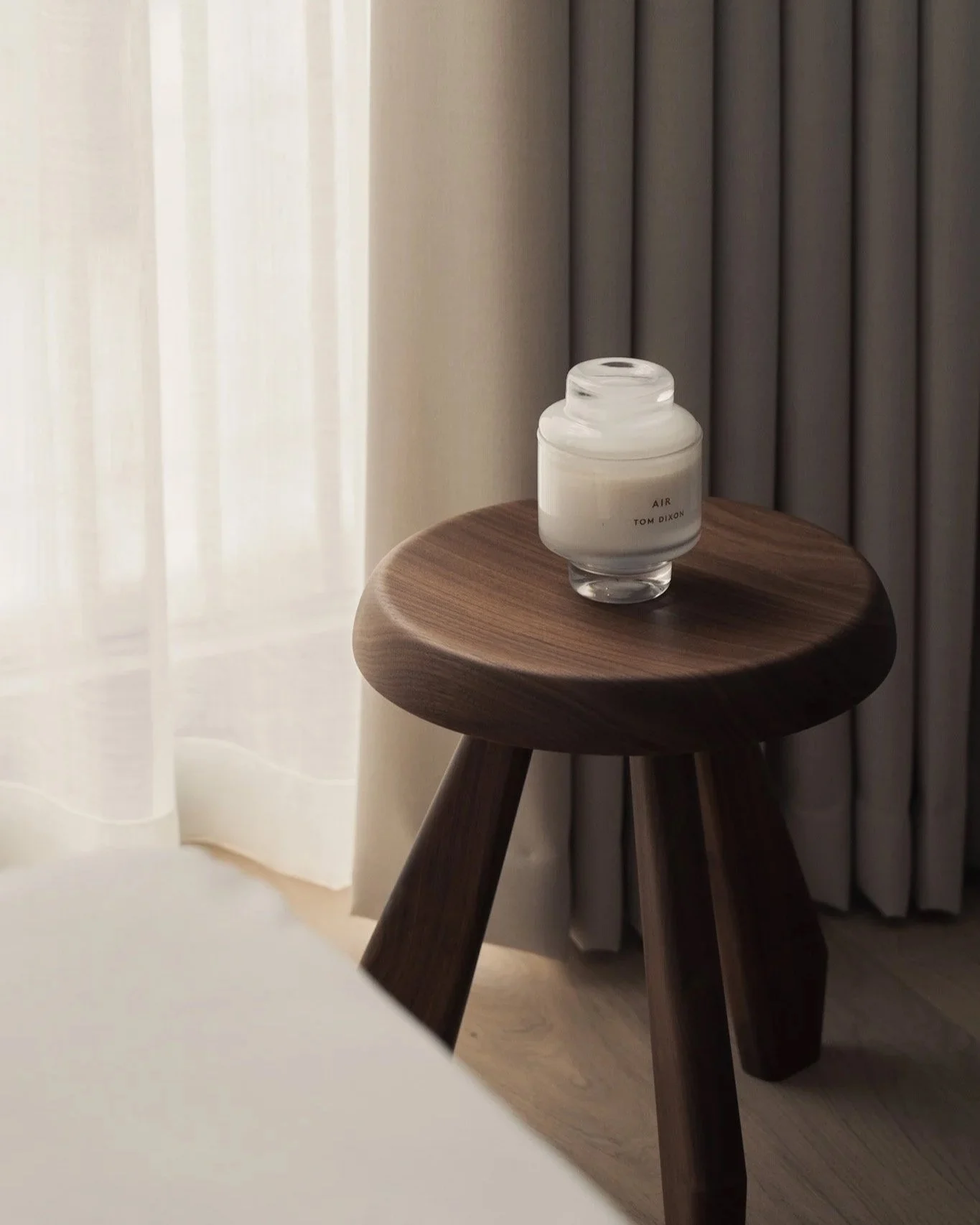
The taller Tabouret Méribel, first conceived in 1953 for Perriand’s own mountain chalet, extends this dialogue with place. Its angular, geometric legs introduce a sharper architectural expression, referencing the timber structures of Alpine interiors. Where the Berger feels compact and intimate, the Méribel asserts itself with slightly greater height and stance. Still carved from solid wood, the tactile softness of the material tempers its structural clarity. Together, the two stools form a study in proportion, their variations subtle yet deliberate.
Across our living space, the stools move fluidly between roles. A side table by the window, a perch beside the sofa, a resting place for books or a quiet object. Their differing heights create rhythm, their solid walnut warmth grounding softer textiles and pale flooring. Part aesthetic, part utility, they embody Perriand’s enduring belief that good design lives in use. Small in scale yet sculptural in presence, they add depth not through decoration but through purpose.
in partnership with aram.com
ADDITIONAL READING